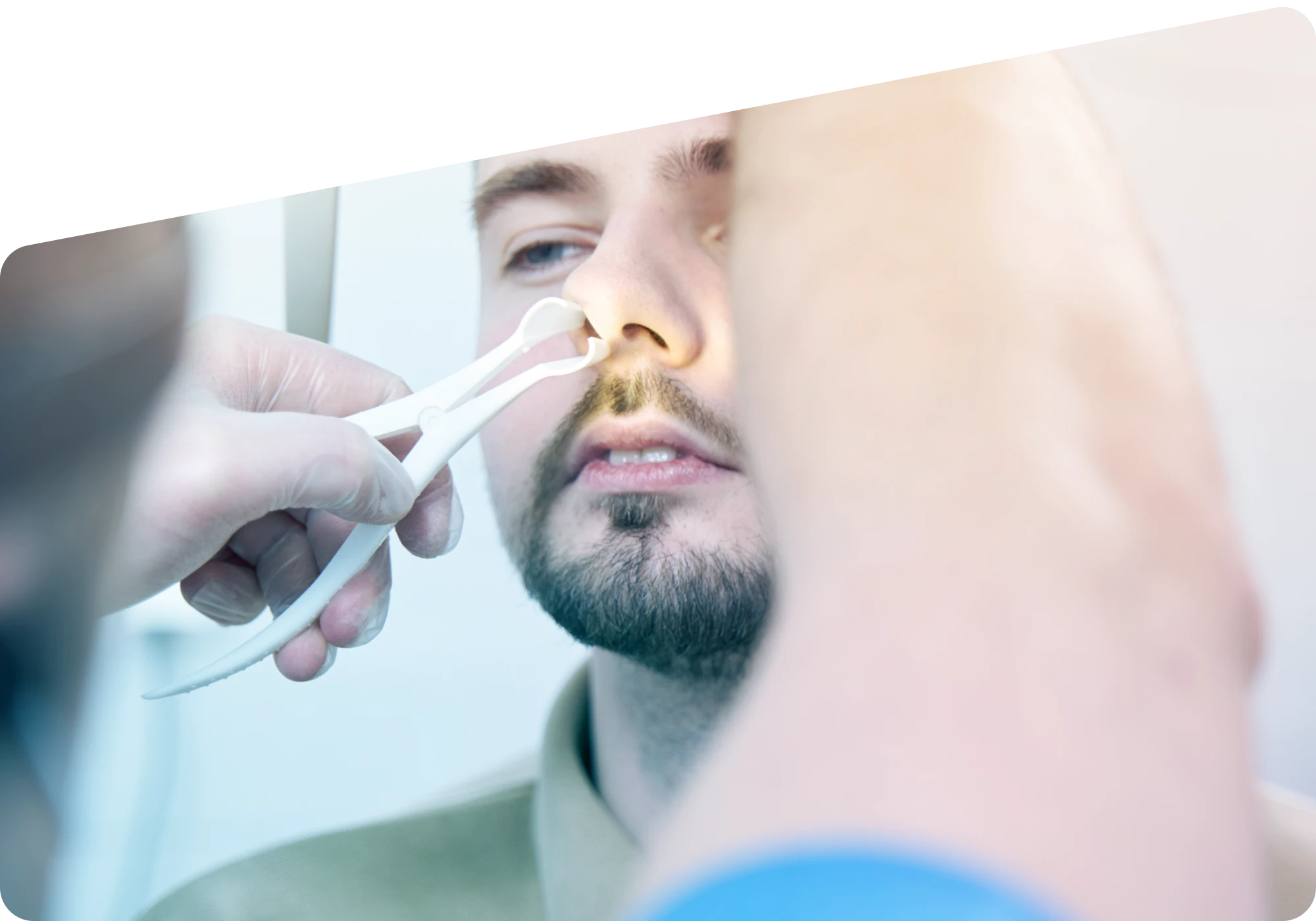
Nasal polyps treatment aims to reduce inflammation, improve breathing, and control symptoms. Treatment usually starts with corticosteroid nasal sprays and saline irrigation, while oral steroids or biologic therapy may be considered in selected cases. Endoscopic surgery may be necessary when symptoms remain uncontrolled despite appropriate treatment. Recovery varies, and nasal polyps can return because underlying inflammation may persist. Regular follow-up and continued medical care help manage recurrence and support long-term nasal health.
Last Updated: 5/11/2026
Nasal polyps treatment usually starts with corticosteroid nasal sprays, often combined with saline irrigation, to reduce inflammation and help shrink polyps. When symptoms remain uncontrolled, a doctor may consider a short course of oral steroids, biologic therapy for selected severe cases, or endoscopic surgery.
Surgery can remove obstructing polyps, but it does not eliminate the underlying tendency toward inflammation. Continued care may therefore be needed to reduce or delay recurrence. The right approach depends on nasal blockage, changes in smell, associated sinus disease, and response to previous treatment. An ENT assessment at Magrabi Health Abu Dhabi can help determine the appropriate next step.
If persistent nasal blockage or reduced smell is affecting your daily life, explore Rhinology and Nose Care at Magrabi Health Abu Dhabi to understand how nasal and sinus conditions are assessed.
The goal of nasal polyps treatment is to reduce inflammation and improve breathing, smell, and quality of life. The available treatment options for nasal polyps depend on symptom severity, associated conditions, and treatment response.
Your situation | Treatment that may be considered | What to expect |
|---|---|---|
Mild or moderate symptoms | Corticosteroid nasal sprays, with saline nasal irrigation | Gradual symptom relief and possible polyp shrinkage |
Persistent symptoms after initial treatment | Specialist reassessment; a short course of oral steroids in selected cases | Additional inflammation control, with attention to side effects |
Significant obstruction or disease poorly controlled by appropriate medication | Endoscopic nasal polyp removal, sometimes combined with sinus surgery | Removal of obstructing tissue followed by ongoing care |
Severe or recurring chronic rhinosinusitis with nasal polyps | Biologic therapy in eligible patients | Targeted control of inflammation under specialist supervision |
The 2025 AAO-HNSF clinical practice guideline on surgical management of chronic rhinosinusitis recommends assessing adults for surgery according to their symptoms, disease characteristics, quality of life, and previous care. It does not recommend imposing the same fixed medical-treatment duration on every patient before surgery.
Yes. For many patients, nasal polyps treatment without surgery is possible, especially when symptoms and inflammation respond to prescribed medication. For many people, non-surgical nasal polyp treatment can make breathing easier and help improve smell, although results vary.
The question "can nasal polyps be removed without surgery" calls for an important distinction between shrinking a polyp and physically removing it. Medication may substantially reduce its size, but surgery is the procedure that directly removes obstructing tissue. A specialist can explain which approach is reasonable for an individual patient.
The purpose of nasal polyps medication is mainly to reduce inflammation. The choice of nasal polyps medicine depends on symptoms, previous treatment, and related medical conditions. Regular follow-up helps determine whether nasal polyps treatment is controlling symptoms or needs adjustment.
Corticosteroid nasal sprays, including medicines containing fluticasone, mometasone, or budesonide, are commonly used first. They can reduce swelling and help shrink polyps, but regular use may be needed for several weeks before their full effect can be assessed.
These sprays should be used as instructed. Incorrect technique can increase nasal irritation or bleeding, and persistent symptoms should be reviewed rather than treated by repeatedly changing sprays without advice.
A doctor may recommend a short course of oral corticosteroids when symptoms are more severe or sprays have not provided enough relief. They may improve blockage temporarily, but repeated courses can cause side effects such as changes in blood glucose, blood pressure, sleep, or mood.
For this reason, oral steroids are not a routine long-term substitute for medical follow-up.
Biologic therapy targets specific inflammatory pathways and may be considered for selected patients with severe or recurrent disease. Suitability depends on the diagnosis, previous treatments, associated asthma or other conditions, and local prescribing criteria and availability.
Other medication for nasal polyps may address related problems rather than shrink the growths directly. Antihistamines can help some allergy symptoms, while antibiotics are used only when a bacterial infection is suspected or diagnosed. Antibiotics do not directly remove nasal polyps.
The Mayo Clinic guide to nasal polyps diagnosis and treatment describes these medical options alongside surgery and follow-up care.
People searching for how to reduce nasal polyps or how to get rid of nasal polyps may come across home-removal methods. However, nasal polyps home treatment can help manage symptoms and support prescribed care, but it cannot safely remove or dissolve nasal polyps.
The following measures may help improve nasal comfort:
Saline nasal irrigation: Helps wash out mucus and irritants. Use sterile, distilled, or previously boiled and cooled water, and clean the irrigation device as directed.
Avoiding nasal irritants: Limit exposure to smoke and other known irritants that may worsen nasal inflammation.
Managing allergies and asthma: Follow your clinician's recommendations to help control conditions that may contribute to nasal inflammation.
Following prescribed treatment: Continue medications and nasal care as directed by your ENT specialist.
These measures can support nasal polyps treatment by improving comfort, but they do not replace prescribed medication or specialist care.
Instructions about how to remove nasal polyps yourself are unsafe. Attempting to pull, cut, or remove a suspected polyp at home can lead to:
Bleeding: Injury to the delicate tissues inside the nose.
Infection: Increased risk of infection from unsterilized tools or damaged tissue.
Nasal injury: Damage to surrounding structures within the nasal passages.
If you are wondering how to remove nasal polyps, arrange an ENT examination first. Not every nasal growth is a benign polyp, and proper diagnosis is essential before choosing treatment.
Nasal polyp removal surgery may be considered when confirmed polyps cause substantial obstruction, loss of smell, or troublesome sinus symptoms and the expected benefit of surgery outweighs continued medical management alone.
Decisions about nasal polyps surgery take account of:
The effect of blockage, smell loss, and sinus symptoms on daily life.
Nasal endoscopy or imaging findings when clinically indicated.
Previous treatments, risks, and the patient's preferences.
A fixed number of weeks on medication is not an automatic requirement for every adult. Some people benefit from continued medicines, while others may be better served by surgery as part of a long-term plan.
If you have questions about persistent nasal symptoms or how to arrange an ENT assessment, contact the Magrabi Health team on WhatsApp to ask about Rhinology care in Abu Dhabi.
For nasal polyps removal, an endoscope is usually passed through the nostril. During endoscopic nasal polyp removal, the surgeon uses a camera and specialized instruments to remove obstructing tissue without an external facial incision in most cases.
A nasal polyp removal procedure may be combined with functional endoscopic sinus surgery (FESS) if the sinuses also need treatment. In selected cases, surgery to remove nasal polyps can relieve obstruction, but long-term treatment may still be required to manage the underlying inflammation.
For a fuller explanation of sinus procedures and surgical preparation, read Sinus Surgery: When Is It Needed and What to Expect?.
The exact nasal polyps surgery time depends on how extensive the polyps are, whether one or both sides are affected, and whether additional sinus work is planned. A limited procedure may be shorter than extensive FESS. The surgeon can give a more useful estimate after examination and, when needed, imaging.
The main nasal polyps surgery risks include bleeding, infection, scarring, persistent symptoms, and recurrence. Rare but serious surgical complications can involve injury to structures around the eye or a cerebrospinal fluid leak. Anesthesia also carries risks that should be discussed before the procedure.
The individual risk profile depends on anatomy, previous operations, general health, and the surgical plan. Surgery should be considered after a discussion of benefits, alternatives, and possible complications.
The first days of nasal polyp surgery recovery often include temporary congestion, mild blood-stained discharge, pressure, and tiredness.
Some patients can return to light, desk-based work after about a week. However, recovery after polyp removal and internal sinus healing may continue for several weeks, depending on the extent of surgery. After surgery, nasal polyps treatment may still include prescribed sprays and follow-up visits to support long-term control.
After surgery, postoperative care commonly involves:
Using prescribed medication and saline rinses according to the surgeon's instructions.
Avoiding forceful nose blowing, heavy lifting, and strenuous exercise during early healing.
Attending scheduled visits to check healing and adjust treatment.
Seek prompt medical advice for heavy bleeding, worsening severe pain, fever, or unexpected symptoms. Sudden vision changes or swelling around the eye require urgent assessment.
Yes. The risk of nasal polyp recurrence remains because medicines and surgery may control the disease without eliminating the chronic tendency toward inflammation. The question "do nasal polyps grow back" is therefore important even after symptoms improve.
Recurrence does not always mean that a treatment has failed or that another operation is needed. Some patients develop returning inflammation or milder symptoms that can be managed with medication and follow-up. Others develop larger recurrent polyps that require a new assessment.
Asthma, severe chronic sinus inflammation, and aspirin-exacerbated respiratory disease can complicate long-term control. In practice, managing recurring nasal polyps may involve prescribed sprays, saline irrigation, attention to associated conditions, and regular review. In selected cases, biologic treatment or further surgery may be discussed.
The aim of follow-up treatment is to track symptoms and nasal findings, reduce inflammation, and limit the need for repeat procedures where possible. The aim of long-term nasal polyp management is better disease control, not a guarantee against recurrence.
For many patients, reducing nasal inflammation remains an important part of long-term care, even after surgery. Continued medical treatment and regular follow-up may help manage symptoms and reduce or delay recurrence.
In the UAE, nasal polyp removal cost varies depending on several factors, including:
Type of treatment: Whether care involves medication, surgery, or ongoing monitoring.
Surgical procedure: The type and complexity of the operation, if surgery is required.
Surgeon and facility fees: Costs associated with the medical team and healthcare facility.
Anesthesia: The type of anesthesia required for the procedure.
Diagnostic imaging: Any scans or additional examinations needed before treatment.
Follow-up visits: Postoperative appointments and ongoing care.
Insurance coverage: The patient's insurance benefits and any preauthorization requirements.
The total cost of nasal polyps treatment can therefore differ from one patient to another.
For a reliable estimate, an ENT specialist should first assess whether surgery is necessary and what the treatment involves. Before comparing prices, confirm which services are included in the quoted cost.
An ENT assessment is appropriate when:
Nasal blockage or reduced smell continues despite initial care.
Disturbed sleep or recurring sinus symptoms affect daily life.
A suspected growth affects one side, or repeated nosebleeds occur.
The doctor may use nasal endoscopy and, in selected cases, CT imaging to confirm the diagnosis and guide a nasal polyp treatment plan. One-sided growths and repeated bleeding deserve particular attention because other conditions can resemble nasal polyps. To understand the signs in more detail, read Nasal Polyps Symptoms: Signs, Causes and When to Seek Care.
If nasal polyps continue to affect breathing or repeatedly return, You can book an appointment with Magrabi Health through a phone call or use the booking form to request an ENT consultation in Abu Dhabi and discuss the next step.
Nasal polyps treatment may involve corticosteroid sprays, supportive nasal care, selected advanced medicines, or endoscopic surgery. The choice depends on symptoms, examination findings, previous treatment response, and individual risks. Surgery can remove obstructing polyps, but continued care may be needed because inflammation and polyps can return. An ENT assessment at Magrabi Health Abu Dhabi can help patients understand the available options and plan appropriate follow-up.
Medically reviewed by Dr. Ahmed Morsi .
Medical Disclaimer: The information in this article is for health education purposes only and does not replace a visit to a doctor or consultation with a qualified specialist. Magrabi Health doctors recommend seeking medical evaluation for an accurate diagnosis and appropriate treatment plan.
Mayo Clinic – Nasal Polyps: Diagnosis and Treatment
AAO-HNSF – Clinical Practice Guideline: Surgical Management of Chronic Rhinosinusitis (2025)
Clinical Guidelines for Virtual Management of Acute Rhinosinusitis – 2024
Nasal Polyps Symptoms: Signs, Causes and When to Seek Care
Sinus Surgery: When Is It Needed and What to Expect?

Sinus Headache: Causes and How to Tell It Apart from Migraine

Sinusitis Symptoms: Early Signs, Types and When to See an ENT