Night driving halos and glare may come from an unstable tear film, an irregular cornea (astigmatism, dry eye, post-laser changes), or light scatter inside the eye’s natural lens, often with early cataract. This guide explains common cornea vs lens reasons and the tests that can clarify what’s driving your symptoms.
Last updated: 28/12/2025
Night driving halos and glare may come from an unstable tear film, an irregular cornea (astigmatism, dry eye, post-laser changes), or light scatter inside the eye’s natural lens, often with early cataract.
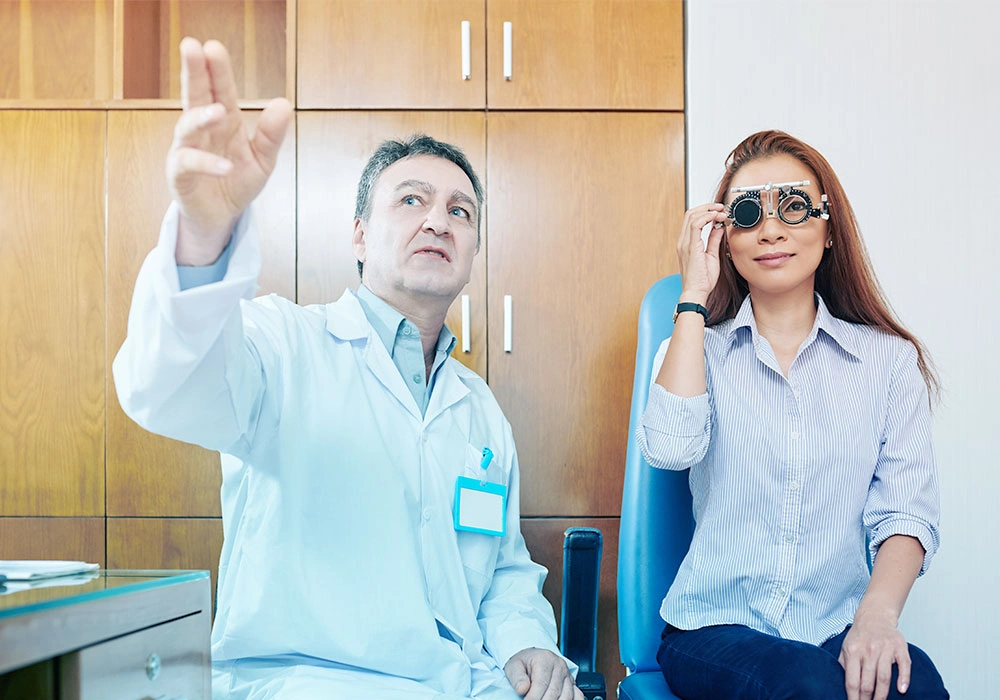
Because causes can overlap, a focused eye exam—refraction, slit-lamp evaluation, and corneal mapping—helps identify the main source and guide realistic steps to improve comfort and safety.
This guide explains common cornea vs lens reasons and the tests that can clarify what’s driving your symptoms.
Want a clearer answer based on your eye exam and scans? Book an eye consultation at a Magrabi Health hospital in the UAE to assess what’s driving your night driving halos and glare.
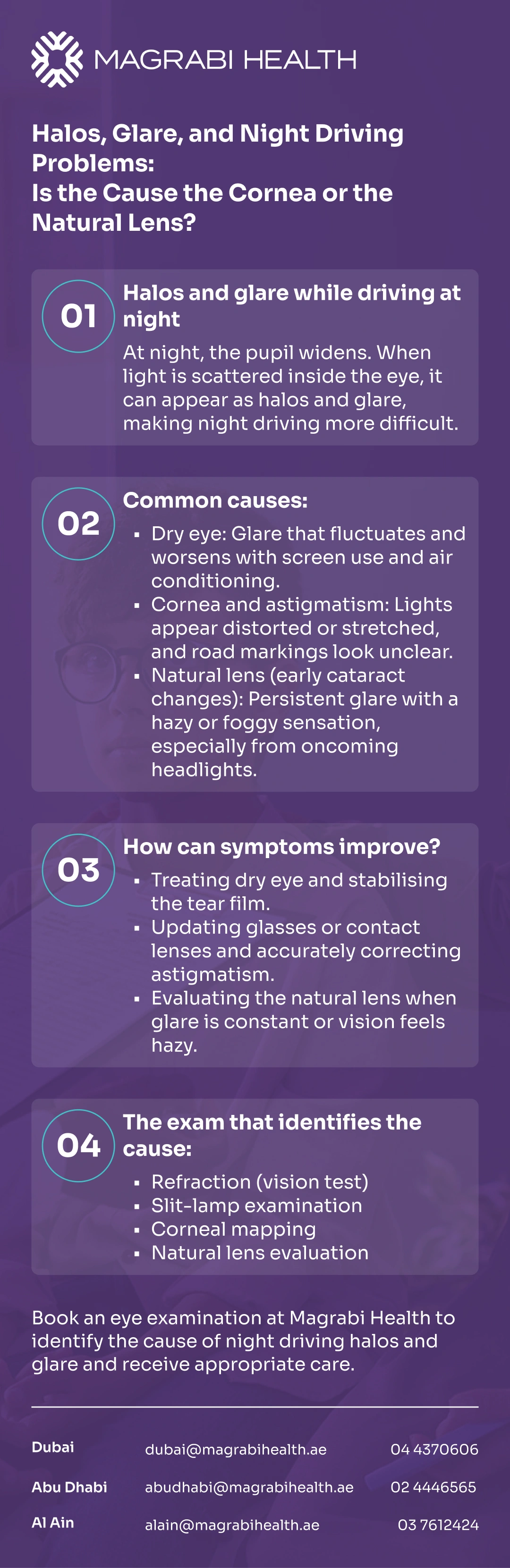
Halos and glare are both ways the eye’s optical system can “spread” light, especially in the dark.
Halos usually look like rings around headlights or streetlights, while glare feels like brightness that washes out detail and makes it harder to see contrast.
At night, symptoms often feel worse because the pupil naturally widens, letting more peripheral light rays enter the eye—so small issues in the tear film, corneal shape (like astigmatism or post-laser changes), or light scatter from the natural lens (often early cataract) can become more noticeable.
This is why night driving halos and glare don’t point to one single cause by themselves.
These clues won’t confirm a diagnosis, but they can help you spot patterns and describe them clearly to your eye doctor—especially if you spend long hours on screens or in air-conditioned settings.
More likely tear film / corneal surface (dry eye): Symptoms fluctuate, worsen with screens or AC, and may improve after blinking, breaks, or lubricating drops.
More likely corneal shape (astigmatism/irregularity): Halos come with ghosting, smeared edges, or distorted lines—even when your windshield is clean.
More likely natural lens (often early cataract): Glare feels steady, with a hazy or washed-out look that doesn’t improve much with blinking, especially from oncoming headlights.
Starbursts (spiky rays): Can be linked to optical distortions from corneal irregularity or post-laser changes, and may overlap with dry eye or lens scatter.
Why it’s worse at night: The pupil widens in the dark, letting in more peripheral light rays, which can amplify both corneal and lens effects.
Mixed causes are common: Dry eye can coexist with astigmatism or early cataract, so night driving halos and glare may have more than one driver.
Cornea-related glare often comes from the front of the eye: the tear film (your “first lens”) and the corneal surface/shape.
When this front optics is uneven—even temporarily—light can scatter and create halos, starbursts, or smeared headlights at night.
Dry eye may show up as fluctuating vision, burning, or grittiness—often worse with screens, air conditioning, wind, or dust. When the tear film breaks up, the corneal surface becomes temporarily uneven and can worsen night driving halos and glare.
You may notice brief improvement after blinking, worse symptoms late in the day, or reduced contact lens comfort at night.
Astigmatism means the cornea isn’t evenly curved, so light doesn’t focus to one sharp point. This can create ghosting, stretching of light sources, or halos—especially at night when the pupil is larger.
If the cornea is more irregular (for example, in keratoconus/ectasia risk or certain post-laser situations), symptoms can be more pronounced and may not fully resolve with standard glasses.
You may notice:
“Double edges” or smeared lane markings.
Starburst-like rays around streetlights.
One eye noticeably worse than the other.
A small corneal scar or mild surface haze can scatter light, even if daytime vision seems acceptable. Past infections, injuries, or inflammation can leave subtle changes that become more obvious with oncoming headlights and high-contrast night scenes.
You may notice:
Persistent glare from bright points of light.
More issues in rainy or humid conditions when light reflections increase.
A contact lens that is slightly dry, deposits-prone, or not fitting optimally can behave like an irregular surface. At night, that can mean halos, glare, and reduced contrast—sometimes only after several hours of wear.
You may notice:
Symptoms worsening the longer the lenses are worn.
Improvement after removing lenses or rewetting (temporarily).
When the natural lens inside the eye starts scattering light, night driving can feel like looking through a faint fog—especially with oncoming headlights. Lens-related glare is often more persistent than dry eye symptoms, and it may be accompanied by reduced contrast rather than sharp “ghosting” edges.
A cataract is a clouding change in the eye’s natural lens. Early on, you may still read well in daylight, but bright point lights at night can bloom and wash out details.
Some people also notice colors look slightly duller or that they need more light for reading than before.
cataract symptoms can show up as night driving halos and glare, even before vision seems “bad.”
You may notice:
Persistent glare from headlights that doesn’t improve much with blinking
A hazy or washed-out look, especially in high-contrast scenes
More difficulty seeing road markings in dim light
After cataract surgery, the clear capsule that holds the artificial lens can become cloudy over time. This is called posterior capsule opacity and can bring back glare or blur after a period of good vision. It’s different from the cataract itself, and it’s typically confirmed during an eye exam.
You may notice:
Gradual return of glare or haze months/years after surgery
More halos around lights compared with daytime vision
Some people with multifocal or extended depth-of-focus (EDOF) lenses may experience halos or glare at night, especially early after surgery. For many, the brain adapts over time, but some continue to notice halos with bright lights. The severity varies, and discussing night driving needs before surgery helps set realistic expectations.
You may notice:
Halos that are most obvious around bright point lights
Symptoms that are stable (not fluctuating hour to hour)
At night, the pupil widens, which can increase glare from scattered light. Some medications, age-related changes, and natural differences in pupil size can make symptoms more noticeable—even when eye findings look similar.
Doctors use a few targeted questions and tests to identify whether glare is mainly from the cornea/tear film or the natural lens.
Symptom pattern: Fluctuating and worse with screens/AC often suggests dry eye/tear film; steady, slowly worsening glare can suggest lens scatter.
One eye vs both: A noticeable difference between eyes can hint at corneal shape differences or asymmetry.
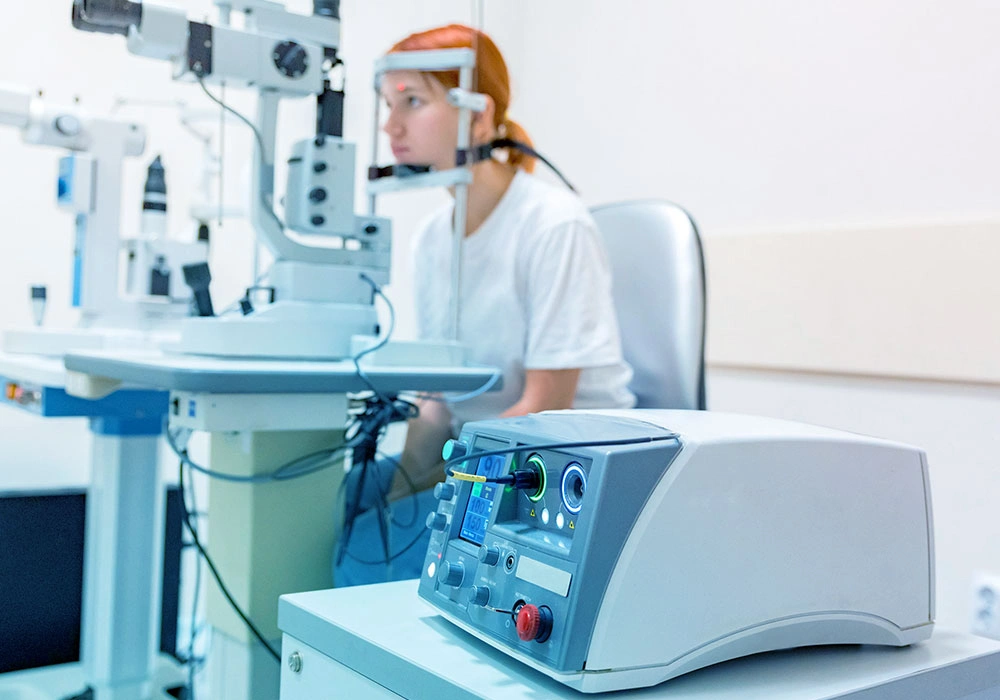
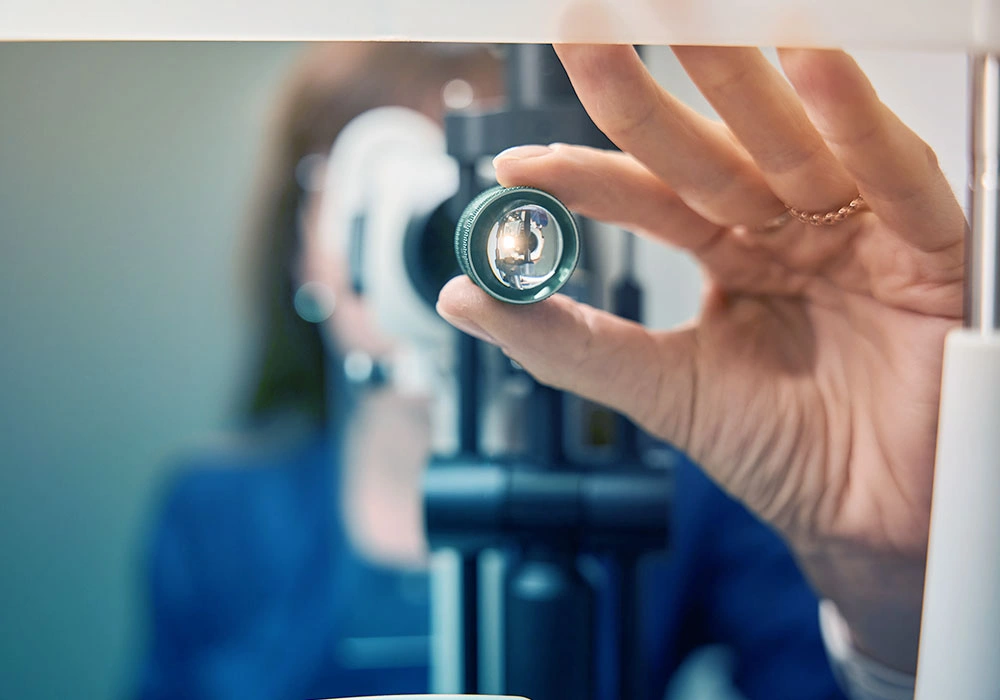
Slit-lamp exam: Checks tear film, corneal surface/scars, and looks for early cataract changes in the natural lens.
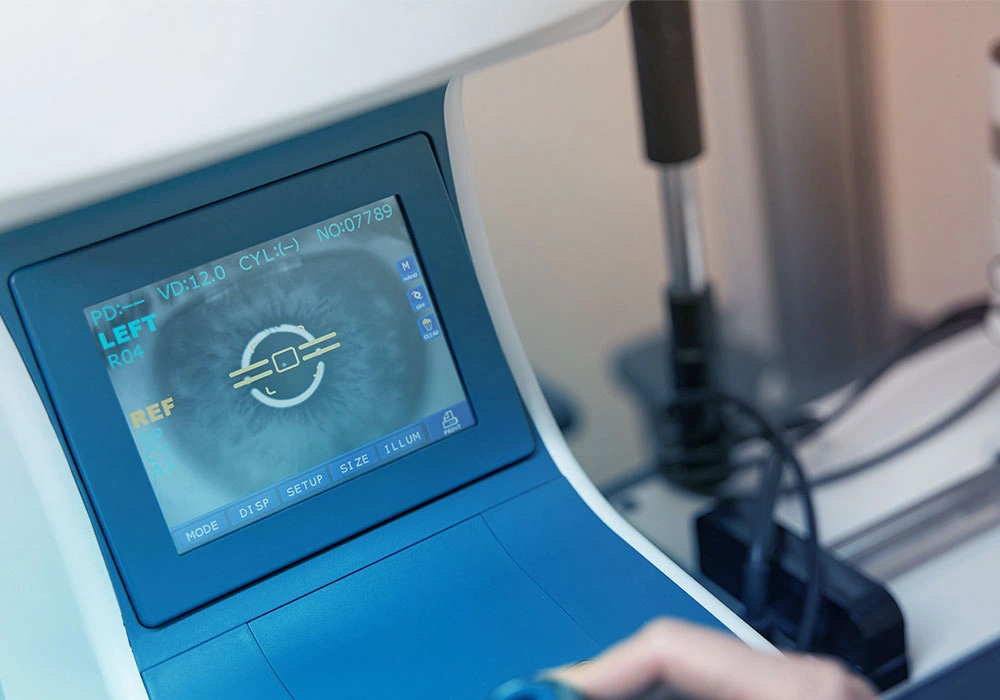
Refraction (best glasses test): Shows how much improved correction (especially astigmatism) reduces symptoms.
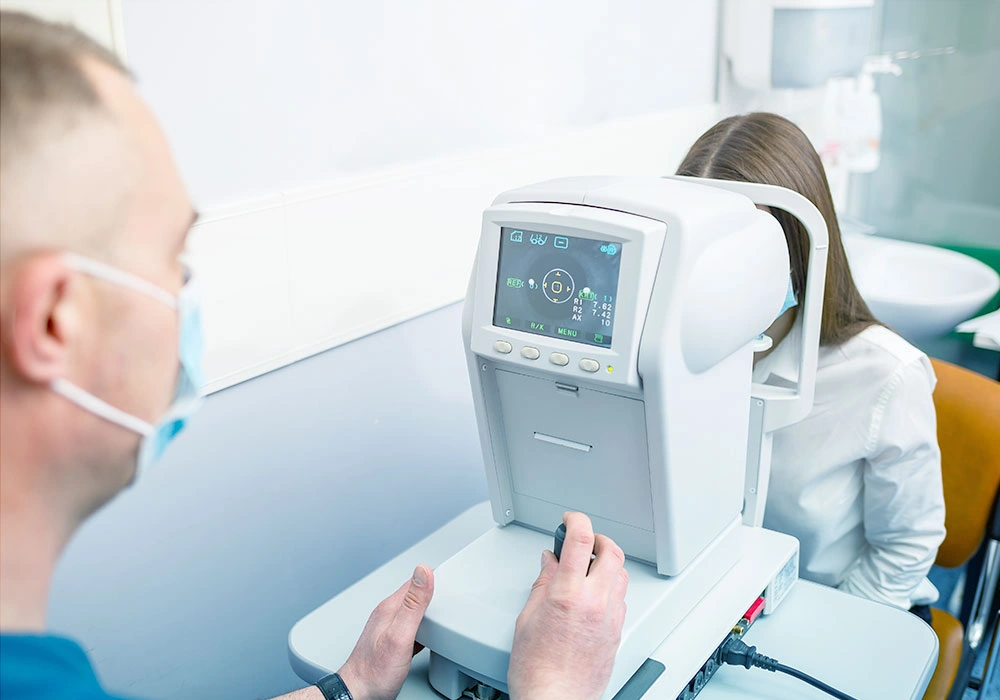
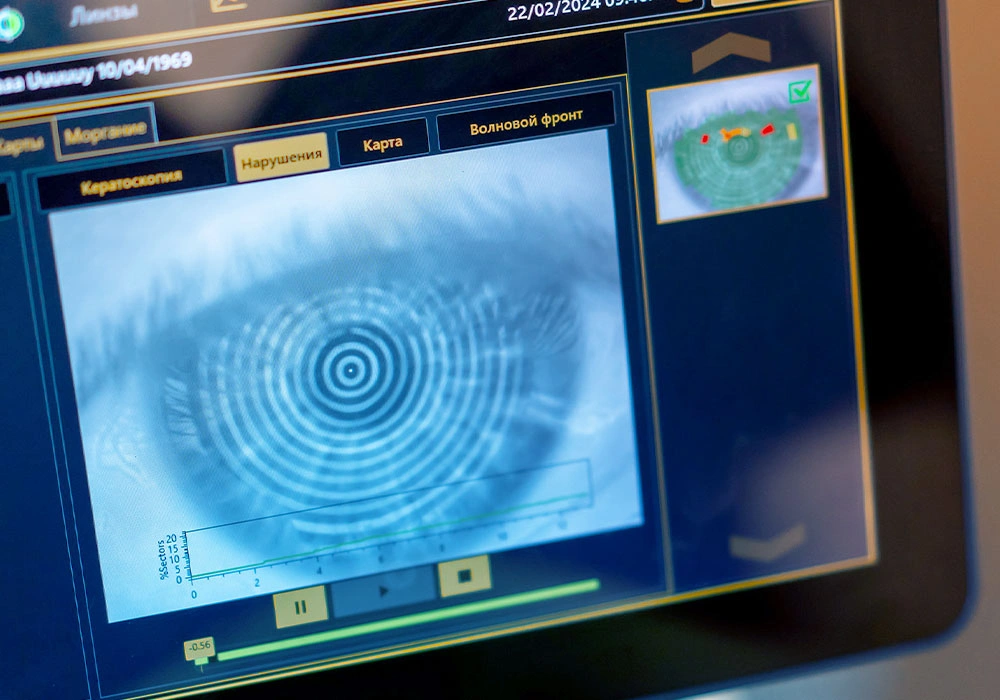
Corneal topography/tomography: Maps corneal shape and thickness to detect irregular astigmatism and rule out keratoconus/ectasia patterns.
Aberrometry (when needed): Measures higher-order optical distortions that can explain halos/starbursts even with good basic acuity.
You can also visit the Refractive and Cornea Care service page on the Magrabi Health website to see what an assessment may include for night driving halos and glare and how specialists evaluate the cornea and natural lens.
If night driving has become stressful, focus first on reducing avoidable glare and collecting details that make your eye exam more useful. These steps are safe to try while you arrange a review.
Do this week: Clean the windshield and mirrors inside and out, reduce dashboard brightness, and take regular screen breaks to limit tear-film instability.
Support the tear film: Blink fully, consider preservative-free lubricating drops if you already use them, and avoid direct AC airflow to the face while driving.
Check your correction: Make sure your glasses/contact lens prescription is up to date, especially astigmatism; consider anti-reflective coating if recommended by your optometrist.
Track the pattern: Note whether one eye is worse, whether symptoms improve after blinking, and which situations trigger the most night driving halos and glare (rain, fatigue, long drives).
Avoid risky conditions: Don’t force night driving when overly tired, during heavy rain, or when glare feels disabling—use safer alternatives when possible.
Book an eye exam if symptoms persist: Especially if glare is new, worsening, or affecting safety; ask if corneal mapping and lens evaluation will be included.
Bring to your appointment: Old glasses, contact lens details, any history of laser vision correction or cataract surgery, and a list of eye drops/medications.
Treatment depends on where the light scatter is coming from, and more than one factor can contribute to night driving halos and glare.
To explore the most appropriate next step for you, visit the relevant service page on Magrabi Health’s website.
Stabilising the tear film is often the first step and may include lubricating drops, eyelid care, and reducing AC airflow to the face.
Updating the prescription and optimising astigmatism correction can help. If the cornea is more irregular, specialty contact lenses may be considered.
If glare is persistent and contrast is reduced, your doctor may assess for early cataract or posterior capsule clouding after cataract surgery, then discuss the most suitable management.
Most cases of glare are not an emergency, but some symptoms need prompt assessment because they can signal a more serious eye problem. If any of the following happen, don’t wait for a routine appointment.
Sudden vision loss in one or both eyes, or a “curtain/shadow” moving across vision
New flashes of light and/or a sudden increase in floaters, especially if vision seems reduced
Severe eye pain, marked redness, or strong light sensitivity (photophobia)
Sudden distortion in one eye (straight lines look bent/wavy) or a sudden central blur
A painful red eye with nausea/headache and rapidly worsening vision
Eye injury (impact) or chemical exposure
New, rapidly worsening symptoms after eye surgery (including sudden glare/blur or significant drop in vision)
Halos and glare while driving at night may come from dry eye, corneal irregularity, early cataract changes, or a combination of factors.
A focused eye exam helps identify the main source and guide a step-by-step plan to improve comfort and safety.
Book an eye consultation at one of Magrabi Health’s hospital branches in the UAE—Dubai, Abu Dhabi, or Al Ain—especially if symptoms are worsening or affecting your driving.
This content is for general education only and does not replace a professional eye examination or personalised medical advice.
The guidance below reflects established patient information from major eye and health organisations.
American Academy of Ophthalmology (AAO) — Vision and driving; cataract-related glare/halos
NHS — Cataracts (symptoms including difficulty seeing at night and light sensitivity)
Guy’s and St Thomas’ NHS Foundation Trust — Dry eye syndrome (symptoms and common triggers such as air conditioning)
Reviewed by Dr. Moataz Sallam, Consultant Cataract, Refractive and Anterior Segment Surgeries, with 20+ years of experience in phaco-refractive and cornea care in Dubai and Al Ain.